When Making Becomes a Constraint
I've been thinking about constraints again.
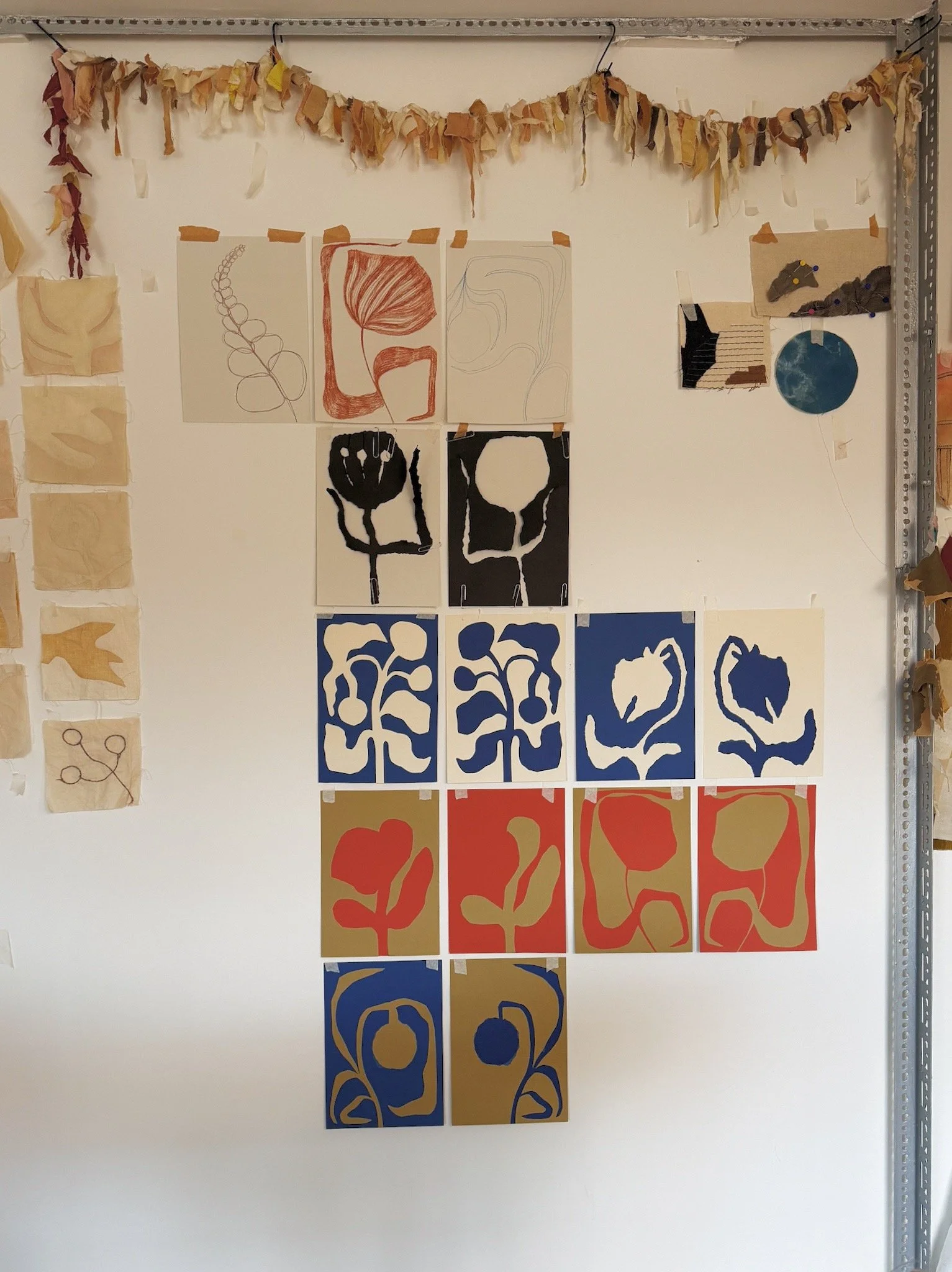
Earlier this year I wrote about the idea of Forms Shaped by Constraint, and the way I was becoming interested in organic forms pushing against geometric boundaries. A flower trying to grow within a square. A stem bending around a corner. Something adapting to the space it has been given.
At the time, I was thinking about this mostly in relation to my work.
I hadn't realised quite how much I would come to think about it in relation to myself.
A summer away from making
I've had a long break from making over the summer. Some of that was intentional. Summer is a different rhythm when you are self-employed and have a child at home. There is less routine, fewer workshops, and quite rightly, people are spending their time outside, going on holiday and enjoying the summer rather than sitting in front of a screen following one of my workshops.
I also needed a break.
A lot has changed in my personal life over the last few months, and I've been adjusting to a new, temporary version of everyday life. There has been a lot to think about, a lot to process and, if I'm honest, not a huge amount of creative energy left over at the end of it.
So I stopped making.
And then, gradually, I stopped talking about making too. I posted less. I got out of the habit of sharing what I was doing. I got out of the habit of marketing my work. The usual rhythm of creating something, photographing it, writing about it, sharing it, teaching it, moving onto the next thing... just stopped.
So now that Summer is over and everyone is in a ‘back to school’ kinda rhythm, coming back to my studio has felt surprisingly difficult.
The studio wasn't helping
Part of the problem was very simple. It was a mess!
I had left it in a state that reflected the way I'd been working for a while: things half started, scraps everywhere, projects pinned to walls, samples on shelves, things I'd intended to return to and things I'd completely forgotten about.
I've spent some time tackling it recently, and just doing that has helped. There is something about being able to see the surface of a table again that makes everything feel slightly more possible. But the bigger problem wasn't really the mess. It was what all those unfinished things had started to represent.
Instead of seeing possibilities, I was seeing evidence. Evidence of all the things I'd started and hadn't finished. Evidence of ideas that had seemed exciting for a few days and then disappeared. Evidence, or so I told myself, that I couldn't see things through.
And suddenly the studio didn't feel like a place where I could play and experiment. It felt like a place full of things I had failed to finish. That is quite a difficult place from which to begin making.
The pressure to make
There is another layer to this too. My studio is where I make things, but it is also where I earn my living. It is another financial commitment. And when work is slower, particularly over the summer, that can be difficult to ignore. When you are self-employed, making isn't always just making. There is always the other voice somewhere in the background asking:
Will this sell?
Could this become a workshop?
Could I make a tutorial from this?
Should I be filming this?
Should I be posting this?
Have I shared enough this week?
Where are the sales coming from?
That pressure can be very good at killing the very thing it is asking for. Creativity becomes another job to be productive at. And when I was already feeling emotionally depleted, the idea of starting another project only to abandon it felt almost unbearable.
Don't just start
I often talk about the importance of simply starting. Don't overthink it. Get your hands moving and let the rest follow. I still believe that. But this time, I didn't want to just start. Because what if I started another thing and didn't finish it? What if I created another fragment to add to the collection of unfinished fragments already making me feel bad? So I stayed away from the studio, which, of course, didn't make me feel any better.
When I did eventually return, I had at least managed to tidy enough to create a clear space on my desk, although there were still plenty of unresolved piles around me. I sat down and looked at them, trying to work out where to begin and feeling completely overwhelmed by the number of possibilities, decisions and unfinished things competing for my attention.
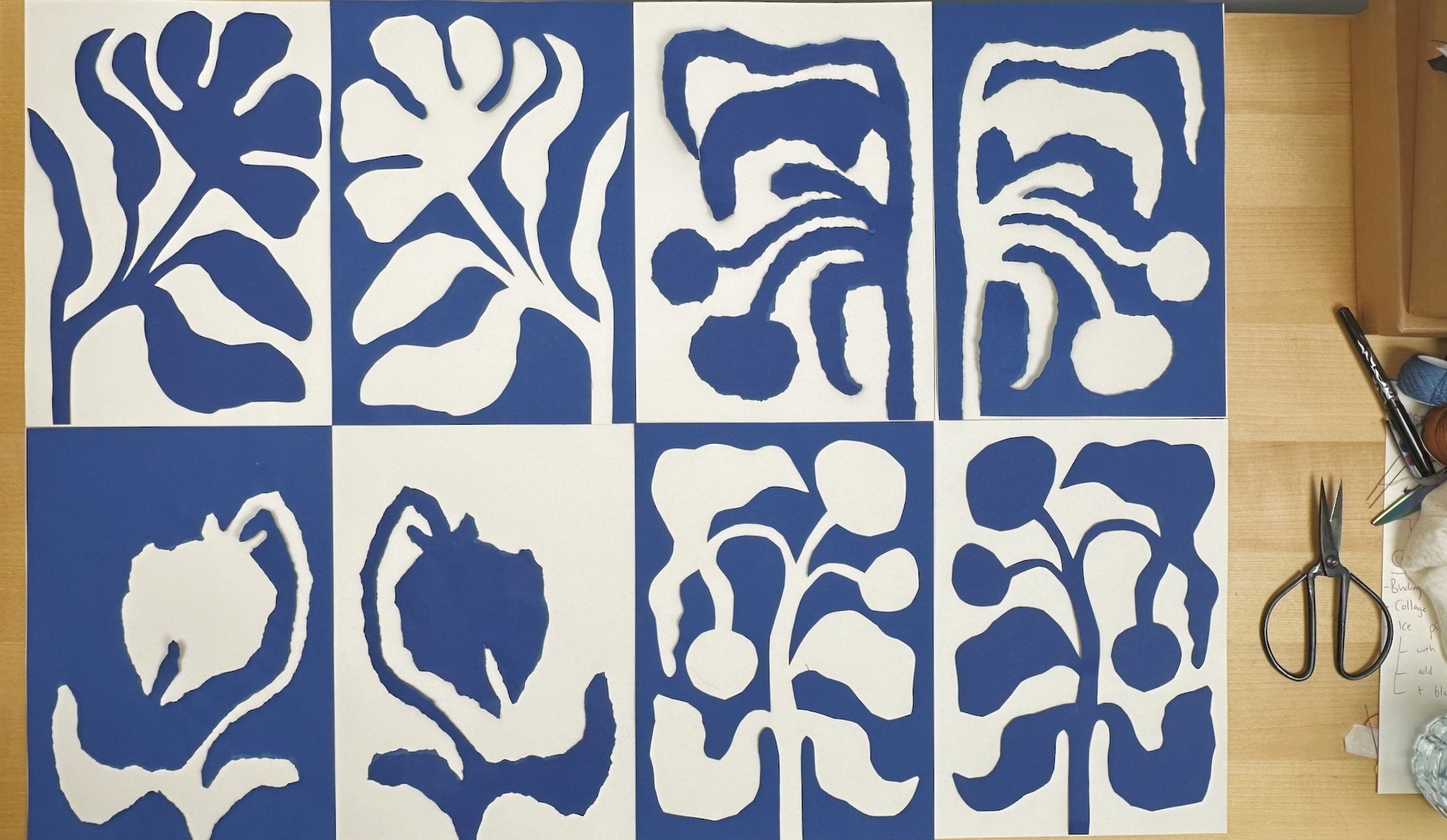
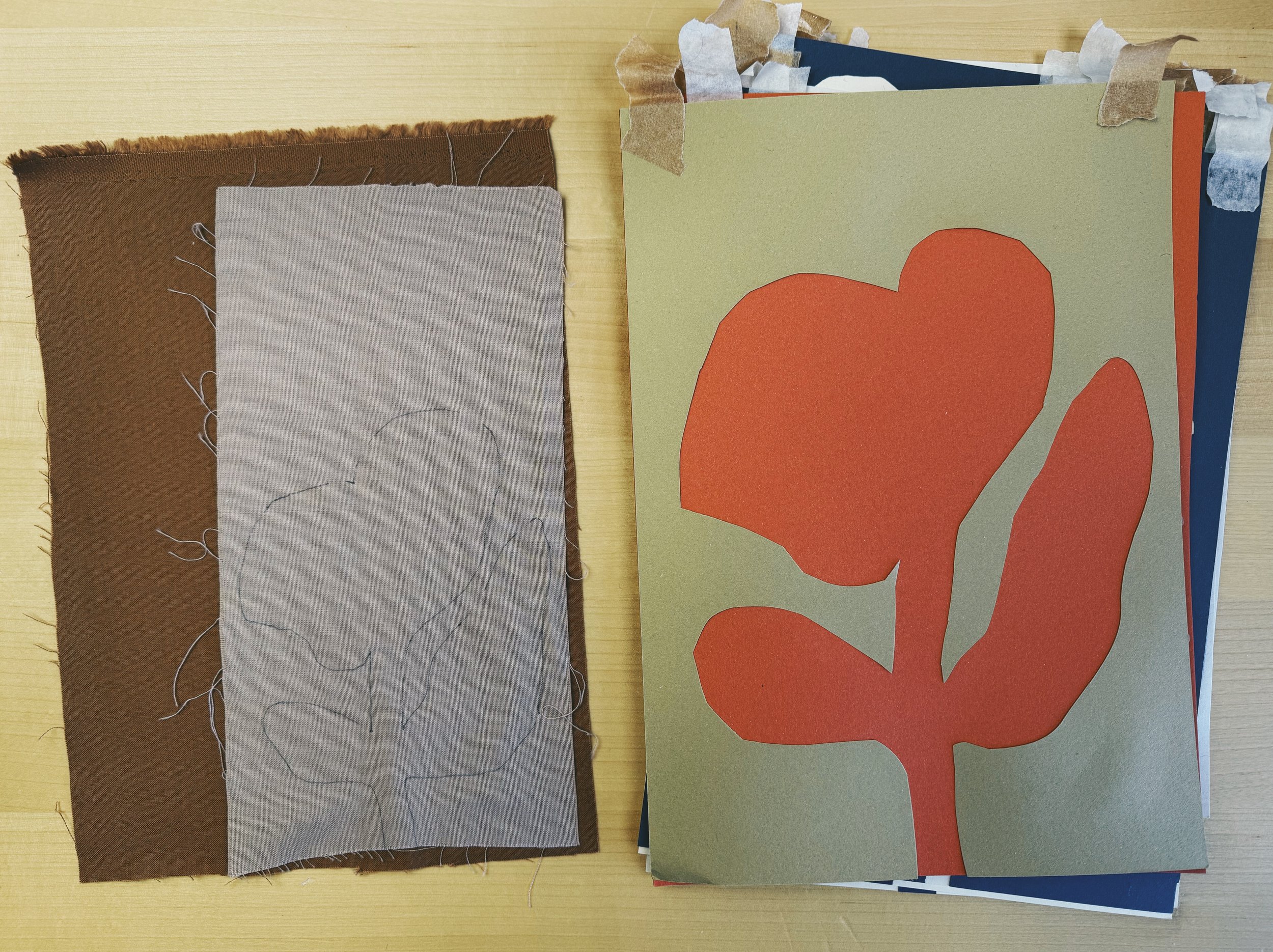
My thoughts returned to that last blog post. The evidence of that little experiment was still sitting in one of those piles. I picked up the stack of paper collages and thumbed through them, remembering how good it had felt to make them. They were quick, instinctive and completely without consequence. I hadn't needed to know where they were going. I had simply been playing with shape and colour, making one after another, and for those few days it had felt easy.
And then I'd abandoned them too.
Perhaps this was another kind of constraint. Not a physical boundary but a story I had started telling myself:
I don't finish things.
My practice is too fragmented.
I should be more disciplined.
I should be producing more.
I should know what I'm working towards.
Perhaps those thoughts were becoming their own set of boundaries. Perhaps I needed to push against them.
Taking away the decisions
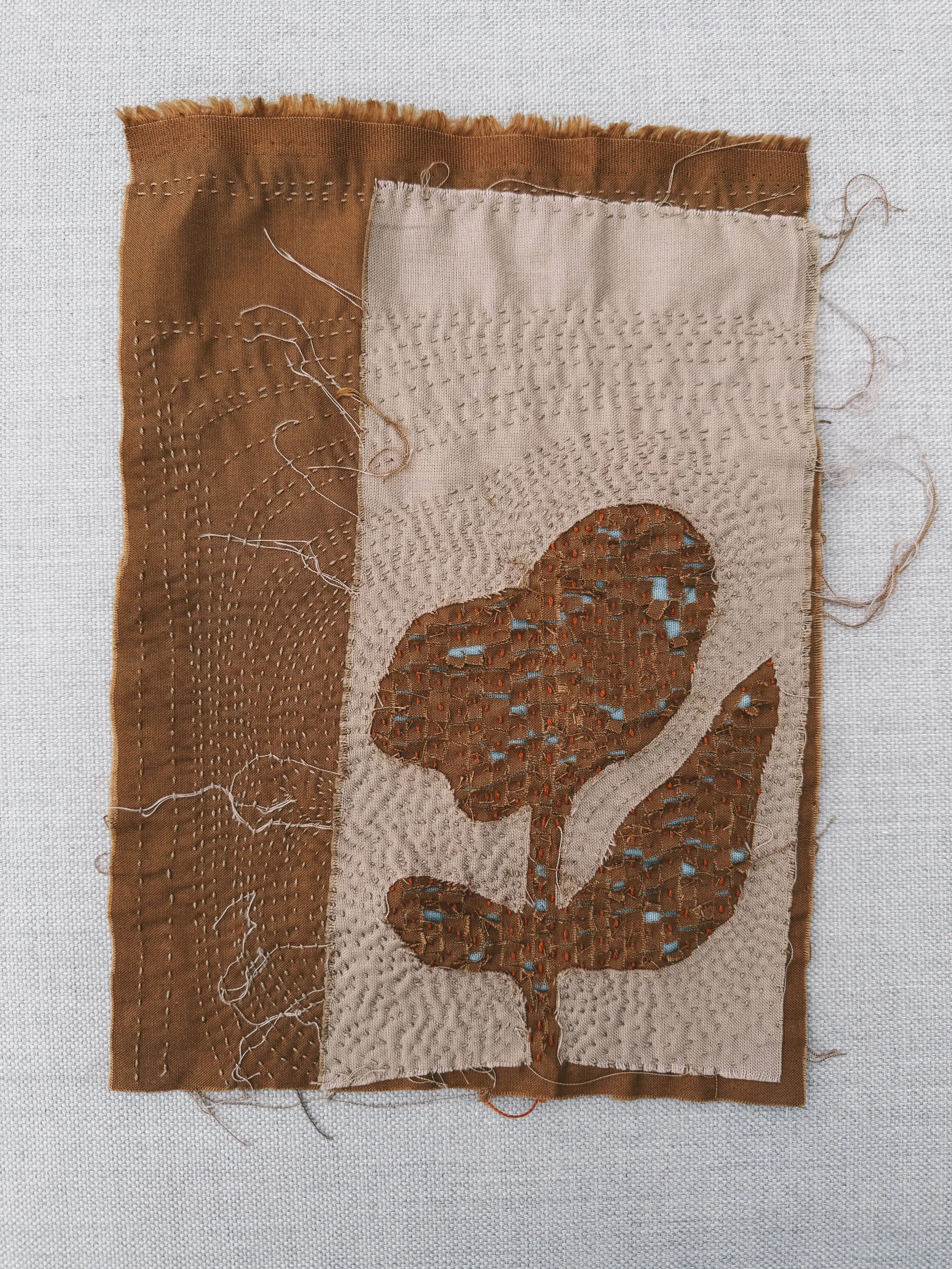
I decided to try something very small. I went back to one of the paper collages I made earlier this year. Those collages were supposed to be my way into a new body of work. They were quick, playful and deliberately unpressured. I made them for a few days, enjoyed them, and then, like so many things before them, I stopped.
I never even wrote the follow-up blog post I'd intended to write. But perhaps that doesn't matter. The experiment wasn't a failure just because it didn't become a finished project.
I took an off-cut of fabric from one of the piles nearby, without much consideration and drew one of the floral shapes onto it. I’d made a start without overthinking. Then I deliberately removed as many other decisions as I could. All of the questions that can potentially prevent me from making a start: what fabric? Should it be Plant dyed? What does it mean? How does it tie in with the rest of my work?
I ignored them.
Instead, I wrote the following down on a piece of paper and stuck it on my wall:
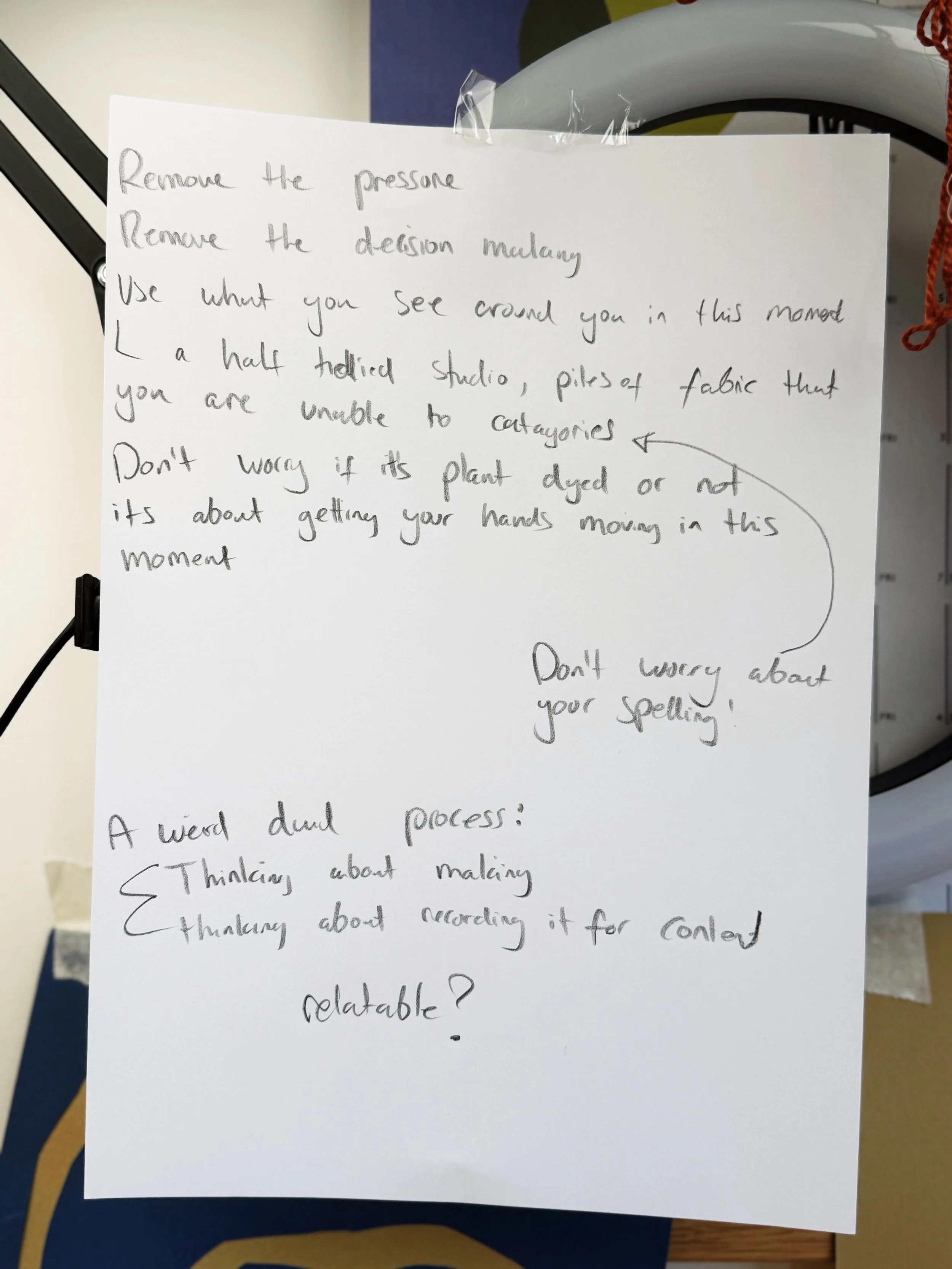
Remove the pressure.
Remove the decision making.
Use what you see around you in this moment.
A half-tidied studio with piles of fabric that you are unable to categorise.
Don't worry whether it is plant dyed or not.
This isn't about making the right thing.
It's about getting your hands moving in this moment.
I wanted to somehow tap back into that frame of mind where I trust that the answer will be revealed through the process of making. That my job is simply to respond to my environment, to how I was feeling in that moment and to the materials I had to hand.
And it actually worked!
I felt like I had released something in the process, broken through a barrier and, perhaps most importantly, got excited about the potential of making again.
Enough to sit down and write this post a few days later.
Challenging the constraint
I started this year thinking about making a body of work around flowers shaped by constraint. Now I'm thinking about the constraints I place around myself. Some of them are real. Some are unavoidable. Some are temporary.
But some are narratives, and narratives can be challenged.
I can't magically remove all the uncertainty from my life at the moment. I can't make the financial pressure disappear. I can't make every unfinished project disappear overnight. And I can't force myself to feel inspired simply because I've decided it is time to get back to work.
But I can change the conditions in which I ask myself to make. I can tidy the table, put some of the unfinished things away, use what is already there and make something without knowing what it will become.
Perhaps most importantly, I can stop measuring the value of my creativity by how much I produce.